How Car Park Line Marking Works
(And Why Getting It Right Matters)
Why car park line marking is more than just paint on the ground
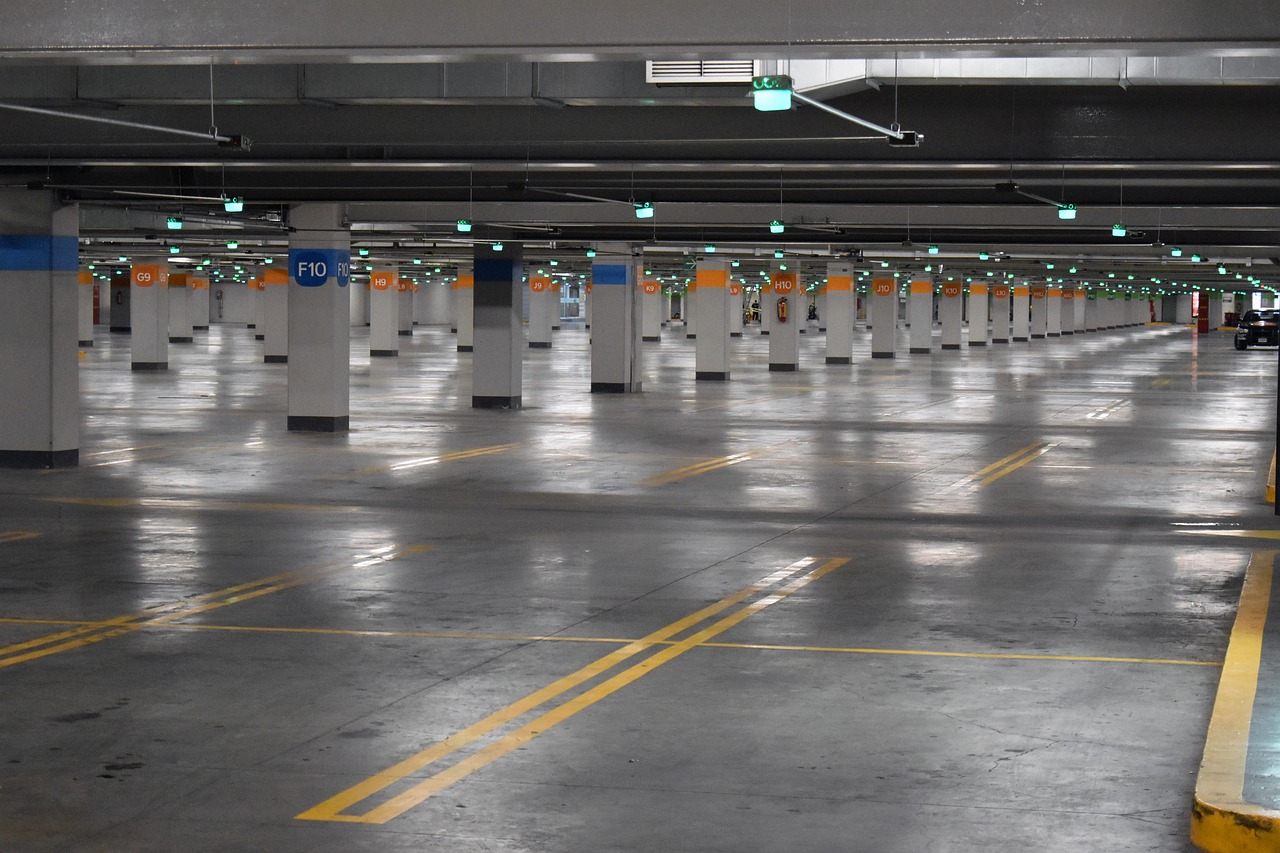
A poorly marked car park looks unprofessional. More importantly, it creates real problems: confusion at entry and exit points, fender benders between bay rows, pedestrians walking into the path of reversing vehicles, and non-compliant accessible parking bays that can trigger complaints under the Disability Discrimination Act 1992.
The lines on your car park floor are doing a lot of quiet work. They tell drivers how wide each bay is, which direction traffic flows, where pedestrians should walk, and where emergency or accessible vehicles need priority access. When they fade or disappear, that system breaks down.
In Melbourne, car park line marking also carries legal weight. Off-street parking facilities are governed by Australian Standard AS/NZS 2890.1. If your markings do not meet those specifications, your property may not pass a council inspection, and your insurer may push back on any accident claim that traces back to unclear or non-compliant markings.
What Australian Standards apply to car park line marking?
Getting this right starts with knowing the rules. There are four key standards that apply to car parks in Australia:
- AS/NZS 2890.1 — the primary standard for off-street car parks. Sets minimum bay sizes, aisle widths, ramp grades, turning radii, and line widths.
- AS/NZS 2890.6 — specifically covers accessible parking bays, including the shared transfer zone requirement alongside each bay.
- AS 1428.1 — accessible paths of travel from parking bays to building entries.
- AS 4049 — sets performance requirements for the pavement marking paints used on the surface.
In Victoria, there is an additional layer. Where a car park interfaces with a public road (entry and exit points, pedestrian crossings at the driveway), the VicRoads Technical Engineering Manual can apply alongside the Australian Standards. That is one reason it matters to use a contractor who understands the Melbourne context, not just the national standards.
What are the minimum dimensions for a standard car parking bay?
Under AS/NZS 2890.1, the numbers for a standard 90-degree bay are:
| Element | Minimum Dimension | Notes |
|---|---|---|
| Bay width (90-degree) | 2.4 metres | 2.6 m recommended for new builds |
| Bay length (90-degree) | 5.4 metres | Measured from line to kerb or wall |
| Aisle width (two-way, 90-degree bays) | 6.2 metres | One-way aisles can be narrower |
| Accessible bay width | 2.4 metres + 2.4 m shared transfer zone | AS/NZS 2890.6 requirement |
| Line width | 80 mm to 100 mm | Must be unbroken and clearly visible |
Angled bays (45-degree or 60-degree) allow narrower aisles but reduce the total number of bays that fit in a given space. The right layout for your site depends on its shape, available width, and whether traffic flows one-way or two-way through each aisle.
How does the car park line marking process work?
A professional line marking job follows a clear sequence. Skipping any stage cuts into how long the markings last and whether they will pass a compliance check.
- Site assessment and layout planning
Before any paint is mixed, the contractor measures the available space and designs a compliant layout. This covers the number of bays that fit, aisle widths, the number of accessible bays required, directional flow, pedestrian paths, and any signage needs. On a re-mark (refreshing an existing layout), the contractor checks whether the current layout still meets AS/NZS 2890.1 or needs adjustment.
- Surface preparation
Paint will not bond properly to a dirty or deteriorated surface. The area is swept, blown clear of dust and debris, and any oil or contamination spots are treated. On surfaces with heavy grime, pressure cleaning is often required before marking begins. If old lines are being removed or changed, grinding or black-out paint is applied first so ghost lines do not confuse drivers.
- Setting out (pre-marking)
The layout is chalked or pre-marked on the surface before any permanent paint is applied. Measurements are checked against the design plan. This is the stage where errors are caught and corrected — once the final paint is down, removing a misplaced line means either grinding or black-out, both of which add cost and time.
- Line marking application
Paint is applied using a line marking machine, which produces consistent, straight lines at the correct 80–100 mm width. Professional machines apply an even film thickness, which affects both appearance and durability. Arrow stencils, disabled bay symbols, bay numbers, pedestrian crossing markings, and any other symbols are applied in this stage.
- Drying and handover
The area is kept clear while the paint cures to a safe vehicle traffic state. Most waterborne acrylic markings are touch-dry in 20 to 30 minutes under normal Melbourne conditions — well fast enough to stage the work in sections overnight or on weekends without closing the entire car park. The contractor does a final walk-through against the plan before handover.
What type of paint should be used in a car park?
Not all line marking paints are the same, and the right choice depends on your surface type, traffic volume, and whether the car park is covered or open to the elements. Here is how the three main options compare for Melbourne conditions:
| Paint Type | Best For | Typical Lifespan | Dry Time |
|---|---|---|---|
| Waterborne acrylic | Open-air car parks on concrete or asphalt | 2 to 3 years | 20 to 30 minutes |
| Two-pack epoxy | Covered or high-traffic car parks, chemical-resistant areas | 5 to 8 years | 4 to 6 hours |
| Thermoplastic | Road-facing areas, heavy external wear, retroreflective requirements | 6 to 8 years | 5 to 10 minutes (as it cools) |
For most Melbourne commercial car parks — retail centres, office buildings, strata complexes — waterborne acrylic is the standard choice. It meets AS 4049 requirements, performs well under UV exposure, and is cost-effective to maintain. Covered parking decks with heavy turning traffic often justify the higher upfront cost of two-pack epoxy because the extended lifespan reduces the frequency of disruption.
How many accessible bays do you need?
The number of accessible parking bays required is set by the National Construction Code and AS/NZS 2890.6, and it scales with the total number of bays in your car park and the building type it serves. Getting this wrong is one of the most common compliance issues in Melbourne car parks.
Each accessible bay must meet specific layout requirements under AS/NZS 2890.6:
- A 2.4-metre shared transfer zone (marked with diagonal lines) alongside the bay.
- Maximum gradient of 1:40 (2.5%) across the bay surface.
- Signage and ground markings conforming to the Australian Standard symbols.
- An accessible path of travel from the bay to the building entry under AS 1428.1.
If you are unsure whether your current accessible bay count and layout meets the standard, a professional line marking assessment will confirm it. The cost of getting it checked is far lower than a Disability Discrimination Act complaint or a council compliance notice.
When should you re-mark rather than start fresh?
There are two scenarios: refreshing an existing layout, and redesigning the layout entirely.
Re-marking is appropriate when the layout itself still works and complies with AS/NZS 2890.1, but the paint has faded to the point where lines are unclear. The surface is prepared, old lines may be over-marked or blacked out if their colour has shifted, and new paint is applied on the same set-out. This is the most common request for commercial car parks.
Redesigning is necessary when the layout no longer works — the bay dimensions do not meet current standards, the number of accessible bays needs to change, or the property use has changed and traffic patterns need to be reconsidered. Old lines are removed or completely blacked out, the new set-out is planned from scratch, and the job is treated as a new installation.
Need your Melbourne car park assessed?
All On The Line provides compliant car park line marking across Melbourne for retail centres, strata complexes, warehouses, schools, and more. Get in touch for a free quote — we will check your layout against the current Australian Standards and give you a clear scope of work.
View our car park line marking servicesCan you DIY car park line marking?
Technically, yes. You can buy line marking spray paint from a hardware store and apply it yourself. In practice, there are a few reasons most property managers and business owners do not go down that path:
- Standards compliance. AS/NZS 2890.1 requires specific bay dimensions, line widths, and accessible bay configurations. Getting these wrong is a liability risk, not just an aesthetic one.
- Equipment. A consistent 80 to 100 mm line at correct film thickness requires a line marking machine, not a spray can. Hand-applied lines tend to be uneven, thinner than the standard requires, and significantly shorter-lived.
- Surface preparation. Proper adhesion requires the surface to be clean and correctly primed. Spray-can applications on an unprepared surface will peel far sooner than a professionally applied coating.
- Layout accuracy. Setting out a car park correctly — especially with multiple aisles, angled bays, and accessible spaces — requires precise measuring and an understanding of how the layout will work in practice for drivers.
For a small private driveway or a temporary marking, DIY can be acceptable. For any commercial or public car park, professional application is the standard because the cost of getting it wrong (re-work, council notices, liability claims) consistently exceeds the cost of doing it correctly the first time.
How long does professionally applied car park line marking last?
Lifespan depends on three variables: the paint type used, the surface it is applied to, and the traffic volume the car park sees. In Melbourne’s climate, UV exposure through summer accelerates fading on waterborne acrylic markings. Here is what to expect:
- Waterborne acrylic on asphalt, moderate traffic: 2 to 3 years before a re-mark is needed.
- Waterborne acrylic on concrete, lower traffic: up to 4 years.
- Two-pack epoxy, high-traffic covered car park: 5 to 8 years.
- Thermoplastic on external high-wear surfaces: 6 to 8 years.
The practical trigger to re-mark is when lines become difficult to read clearly in low light or wet conditions, or when a council or compliance audit is scheduled. Waiting until lines are completely invisible means your car park has already been operating in a non-compliant state for some time.
Do you need a permit for car park line marking in Melbourne?
Refreshing an existing car park with the same layout generally does not require a planning permit in Melbourne. However, if you are changing the number of bays, altering the layout in a way that affects traffic flow, or modifying accessible parking provisions, you may need to notify your local council or obtain planning approval depending on the zoning and the scale of the change.
Projects that involve work visible from or adjacent to a public road — for example, stop lines and pedestrian crossings at a driveway entry — may also require the contractor to hold VicRoads approval. When in doubt, confirm with your local council planning department before work starts.
Frequently asked questions
What Australian Standard applies to car park line marking?
AS/NZS 2890.1 is the primary standard for off-street car park design and line marking in Australia. It sets minimum bay dimensions, aisle widths, and layout requirements. AS/NZS 2890.6 covers accessible parking bays. In Victoria, projects that interface with public roads may also need to meet VicRoads Technical Engineering Manual specifications.
What is the minimum size for a standard car parking bay in Australia?
Under AS/NZS 2890.1, a standard 90-degree parking bay must be at least 2.4 metres wide and 5.4 metres long. The aisle serving 90-degree bays must be at least 6.2 metres wide for two-way traffic.
What paint is used for car park line marking?
Waterborne acrylic is the most common choice for open-air car parks — it is fast-drying, UV-stable and cost-effective. Two-pack epoxy is used in covered or high-traffic areas where longer durability is needed. Thermoplastic is typically reserved for road-facing applications and external high-wear surfaces.
How long does car park line marking paint take to dry?
Waterborne acrylic is touch-dry in 20 to 30 minutes under normal Melbourne conditions. Two-pack epoxy requires 4 to 6 hours before vehicle traffic. Thermoplastic sets within 5 to 10 minutes as it cools. Most car parks can be staged in sections so they never need to fully close.
How many accessible bays does my car park need?
The number of accessible bays required depends on the total number of spaces and the building type. The National Construction Code and AS/NZS 2890.6 set the ratios. A line marking professional can confirm the exact requirement for your site.
How often does car park line marking need to be redone?
Waterborne acrylic in a busy commercial car park typically needs refreshing every 2 to 3 years. Two-pack epoxy and thermoplastic markings can last 5 to 8 years. UV exposure, traffic volume and surface condition all affect lifespan. Faded lines should be re-marked before they fail a council audit.
Can old lines be painted over during a re-mark?
In most cases, yes — new lines can be applied over existing markings once the surface is cleaned and prepared. If the layout is changing, old lines should be removed by grinding or blacked out first so drivers are not confused by ghost lines. This is also an AS/NZS 2890.1 compliance requirement.
Do I need a council permit for car park line marking in Melbourne?
Remarking an existing car park to the same layout generally does not require a council permit in Melbourne. However, any change to the number of bays, the layout, or accessible parking provisions may require planning approval. Work near public roads may also need a VicRoads-approved contractor. Always confirm with your local council before starting.